01
An idea isn't a business.
It becomes one when the market can respond to it. The work is closing that gap without wasting months hiding behind planning.
Christopher L. Penn
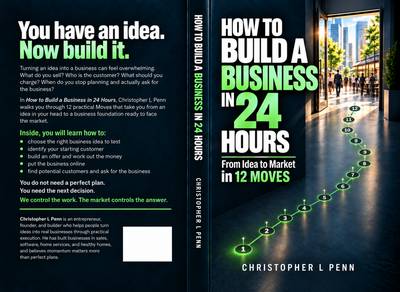
From Idea to Market in 12 Moves
A practical book for turning an idea into a business foundation ready to face the market through 24 focused hours of deliberate work.
Publishing October 26, 2026
Twenty-four focused working hours. No promise of overnight success, revenue or a guaranteed customer.
The problem
I talk to people constantly who want to start something. They're capable. They're often excellent at the actual work. And they've been sitting on the same idea for two, five, ten years.
You do not need every answer. You need the next answer. Then the next one. Then the next one.
What I believe
01
It becomes one when the market can respond to it. The work is closing that gap without wasting months hiding behind planning.
02
The book is built around a deliberate sequence. Each decision creates the information needed for the next one.
03
You need enough clarity to make the next useful decision, then enough courage to keep moving toward the market.
04
Twenty-four focused hours do not have to happen in one day. The point is concentrated execution, not a stunt.
We control the work. The market controls the answer.
The promise
You owe the business 24 focused hours. You decide how quickly to invest them. The clock is a work budget, not a promise that a profitable company appears overnight.
The book gives those hours an order. Instead of staring at a blank page, you work through a sequence of decisions designed to move the idea out of your head and toward the market.
How the book works
I'm not publishing the entire playbook here. The book contains the exact 12-Move sequence, time allocations, questions, exercises and Build Along. What matters before you read it is understanding how the method thinks.
01
The book begins by forcing the right questions before you spend money, build a website or fall in love with a solution.
02
You move toward customers and the market early enough to challenge assumptions before they become expensive mistakes.
03
The process turns decisions into practical business assets without letting branding, paperwork or technology become places to hide.
04
The final destination is not a perfect business on paper. It is a business foundation ready to face real people and learn what happens next.
Who's behind it
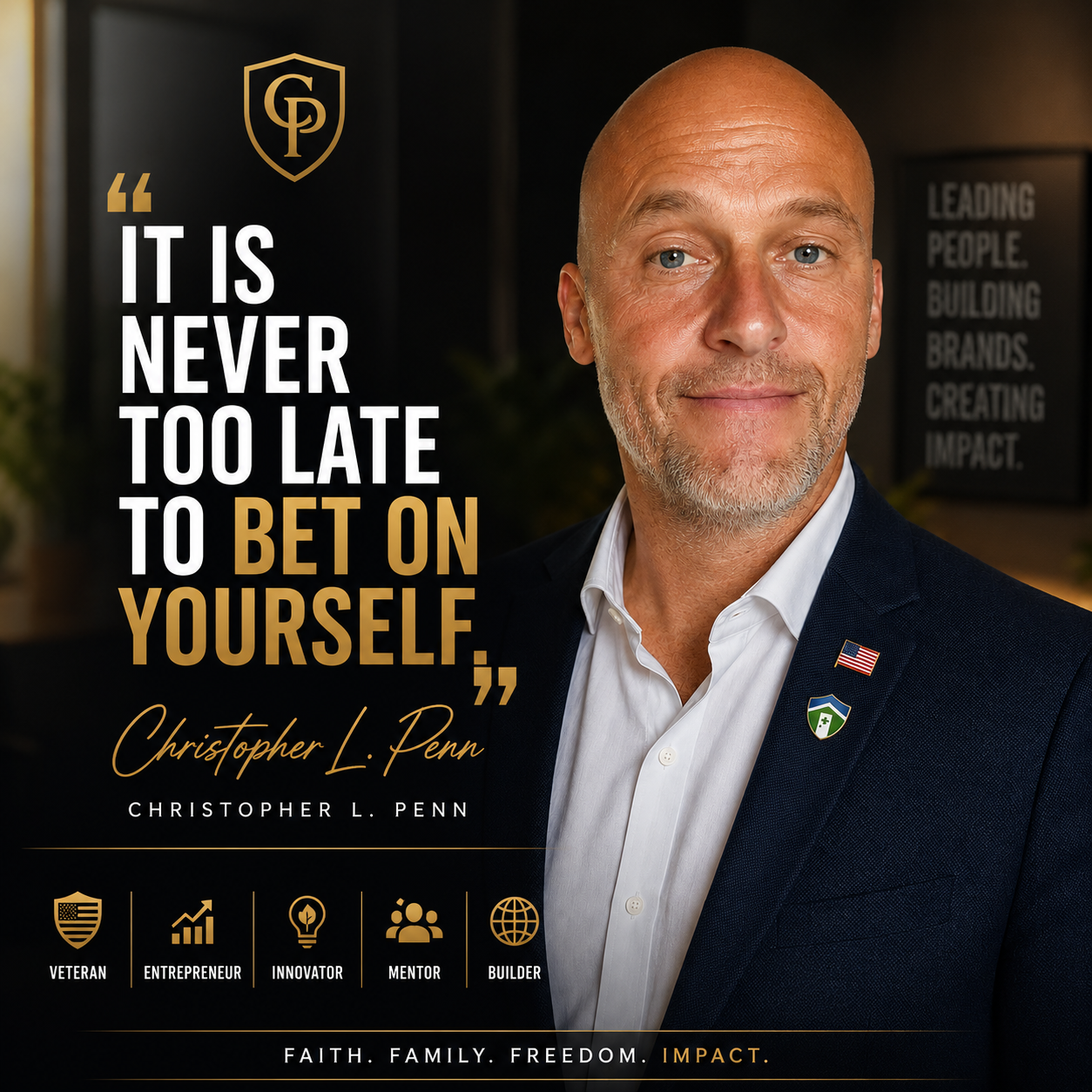
I'm Christopher L. Penn. I've spent more than two decades around business, sales, customers, construction, technology, software, home services and ideas. I have taken ideas and turned them into operating companies, and I have had ideas the market forced me to change.
This is not written from an imaginary finish line. It is me sitting beside you and saying: let me show you how I would get started.
Where AI fits
AI can help you brainstorm, research, challenge assumptions, generate options, draft copy and organize information. Use it where it saves time.
But you still make the decisions. You still verify important information. You still talk to customers. Technology accelerates the work. It does not replace the fundamentals.
Book launch
Follow the final publishing updates, advance-reader notes and launch milestones as the book moves toward release.
See launch updatesThe book
Read a short preview and see what the book is designed to help you build without giving away the full method.
Preview the bookYour turn
The book gives you the sequence. The market gives you the answer.
Book updates and new posts, sent when there's something worth reading.